
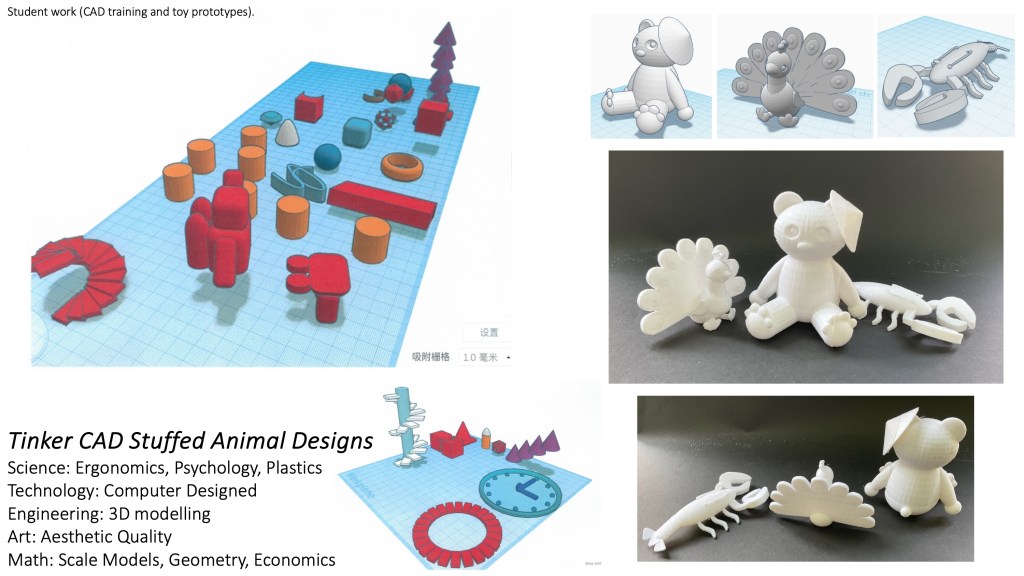
Tinker CAD gets a bad rap by designers because it’s often unfairly compared to more legit CAD programs like Fusion 360 (we currently use OnShape for advanced CAD work in my design program). But when used appropriately, Tinker CAD is actually a great way to get used to creating in the digital 3D world and the relationship to things you make and how they actually look when printed as a prototype. Don’t expect it to engineer much, but because the basic toolbar for Tinker CAD is made up of simple geometric shapes, it works really well for designing simple objects like boardgame pieces, furniture designs, tableware, or in this assignment, toys (something most 12–16 year-olds can easily relate to).
I’ve been working on building a catalogue of accessible STEAM projects and this one of them. The connections to art and technology are pretty obvious, but math and science get their nods too when students look at user data like the psychological functions of stuffed animals, the economics of the toy industry and scale models. Students even pitch their designs for a Taobao ad (China’s equivalent Amazon) in a sort of creative writing meets metacognition prompt in their evaluations.
If you’ve never used Tinker CAD before, the first thing you need to know is that it’s free and completely online. It’s pretty intuitive and there are many good tutorials on how to use it on YouTube. I have my students do a two-hour training split up into four 30-minute videos. They keep screenshots of their progress to put in their design journals (evidence that they actually do the work). Afterwards they design 3 stuffed animal prototypes. My design units follow a design cycle based on the MYP framework (inquiry/analysis, develop ideas, create solutions, and evaluate). More on that later when I write more about integrating STEAM into learning.
We don’t actually sew together stuffed animals. You could just consider this a toy for a happy meal or something…but I like the connection to stuffed animals as it provides an opportunity to study the psychological effects of designs on a specific user demographic, the ergonomics/anthropometrics of toys and the concept of scale models. Last year, we printed roughly 100 of the top designs for our STEAM exhibition and gave them away to kindergarten students who got to color them with paint markers under the guidance of our high school art and design students. It was a nice service learning opportunity.
Below are project examples, design journal entries, and the unit outline. I hope it’s useful!
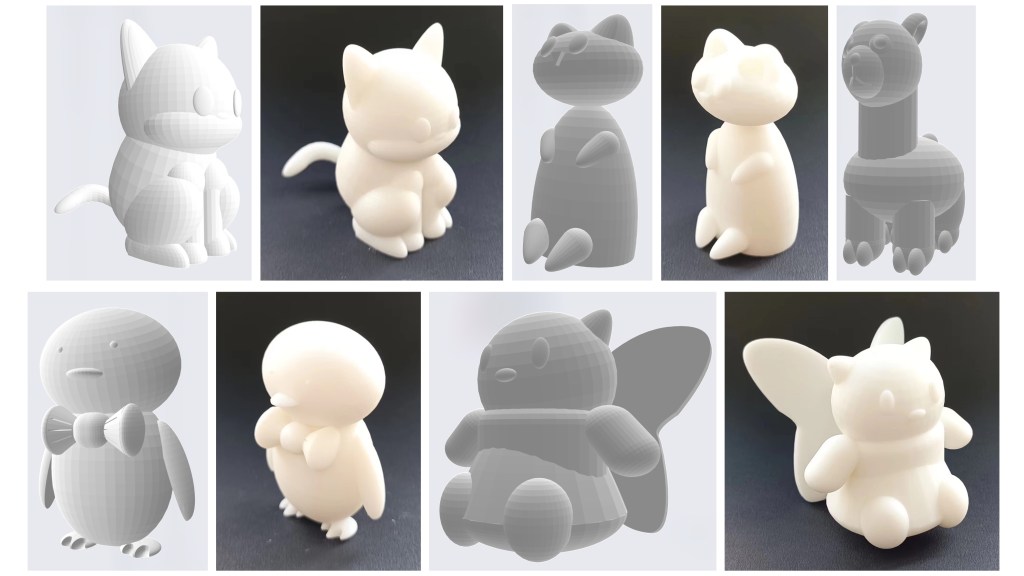
Student projects
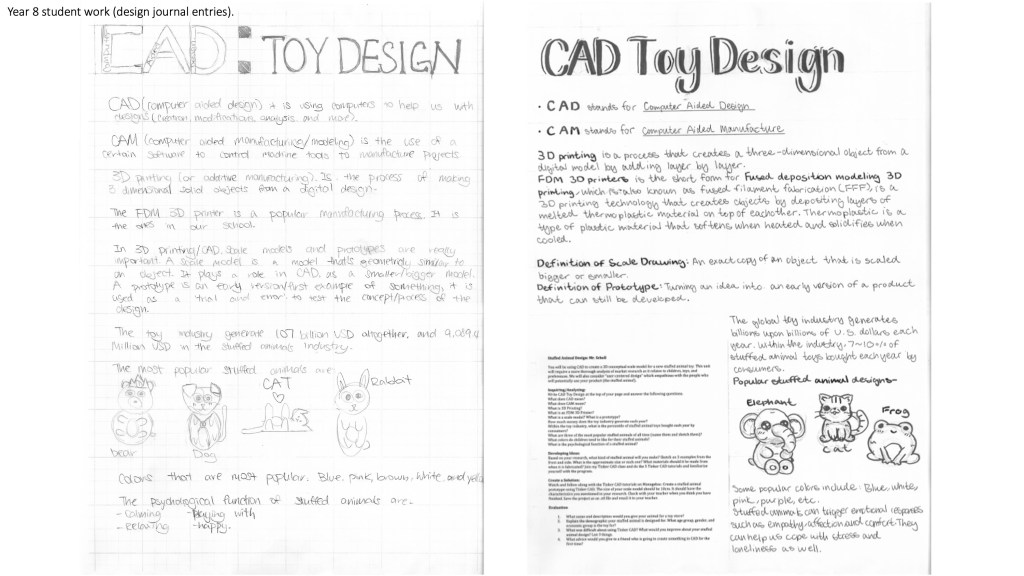
Design journal inquiry/analysis (year 8 students)
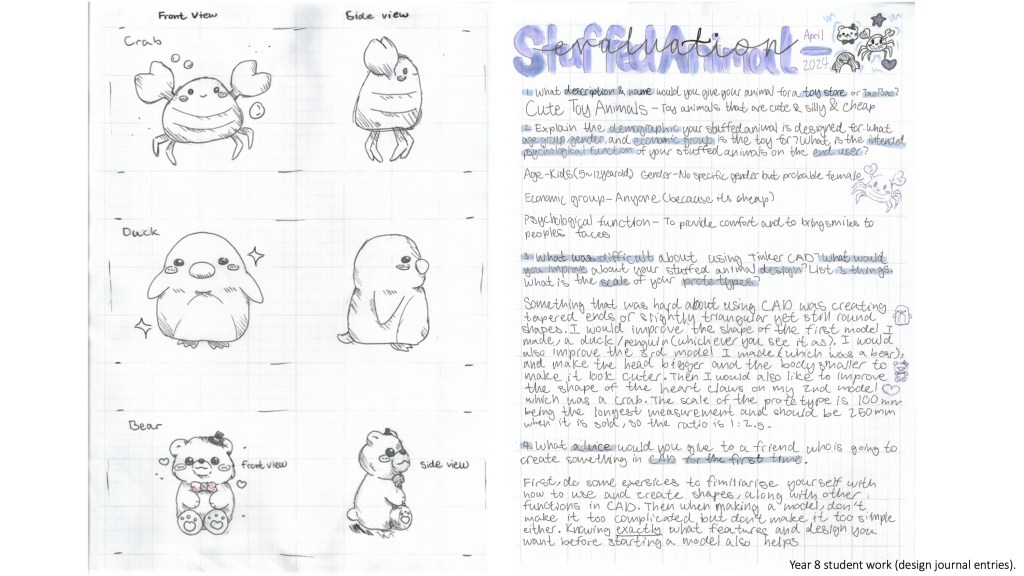
Design journal (year 8 students) sketches and evaluation page
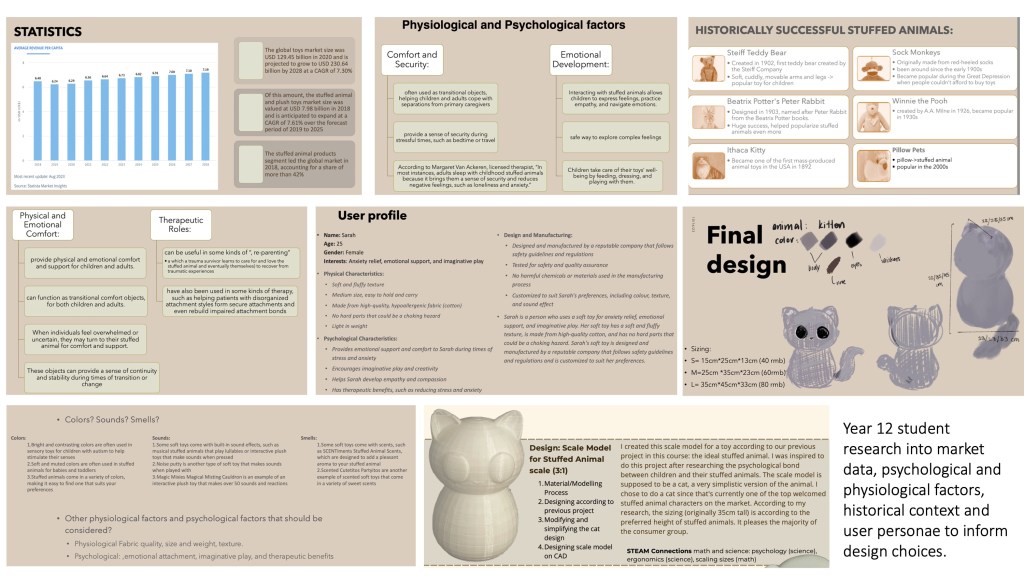
Year 12 student IB Design Topic 1 (Human Factors and Ergonomics)
 Draw, Paint, Think