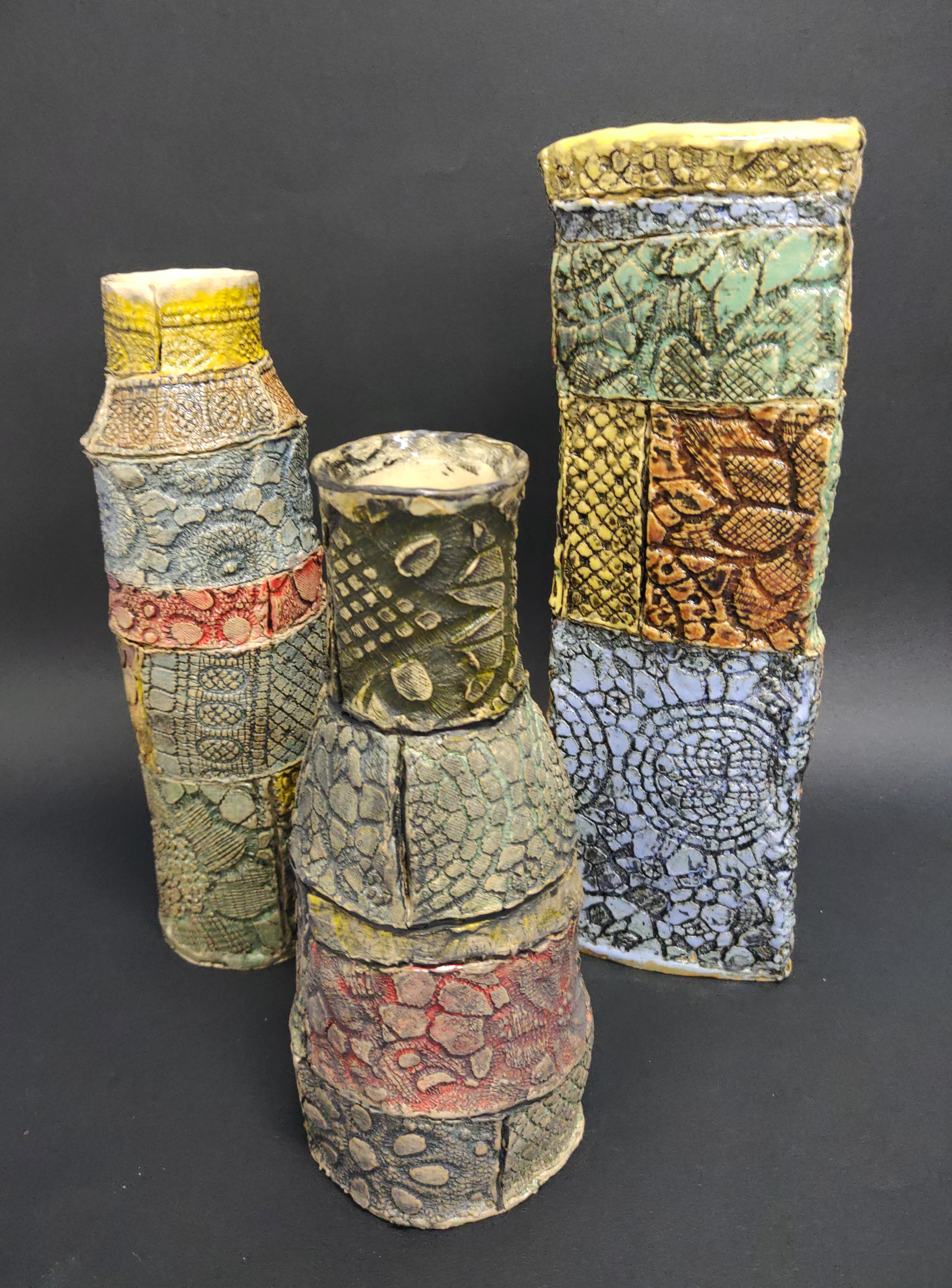
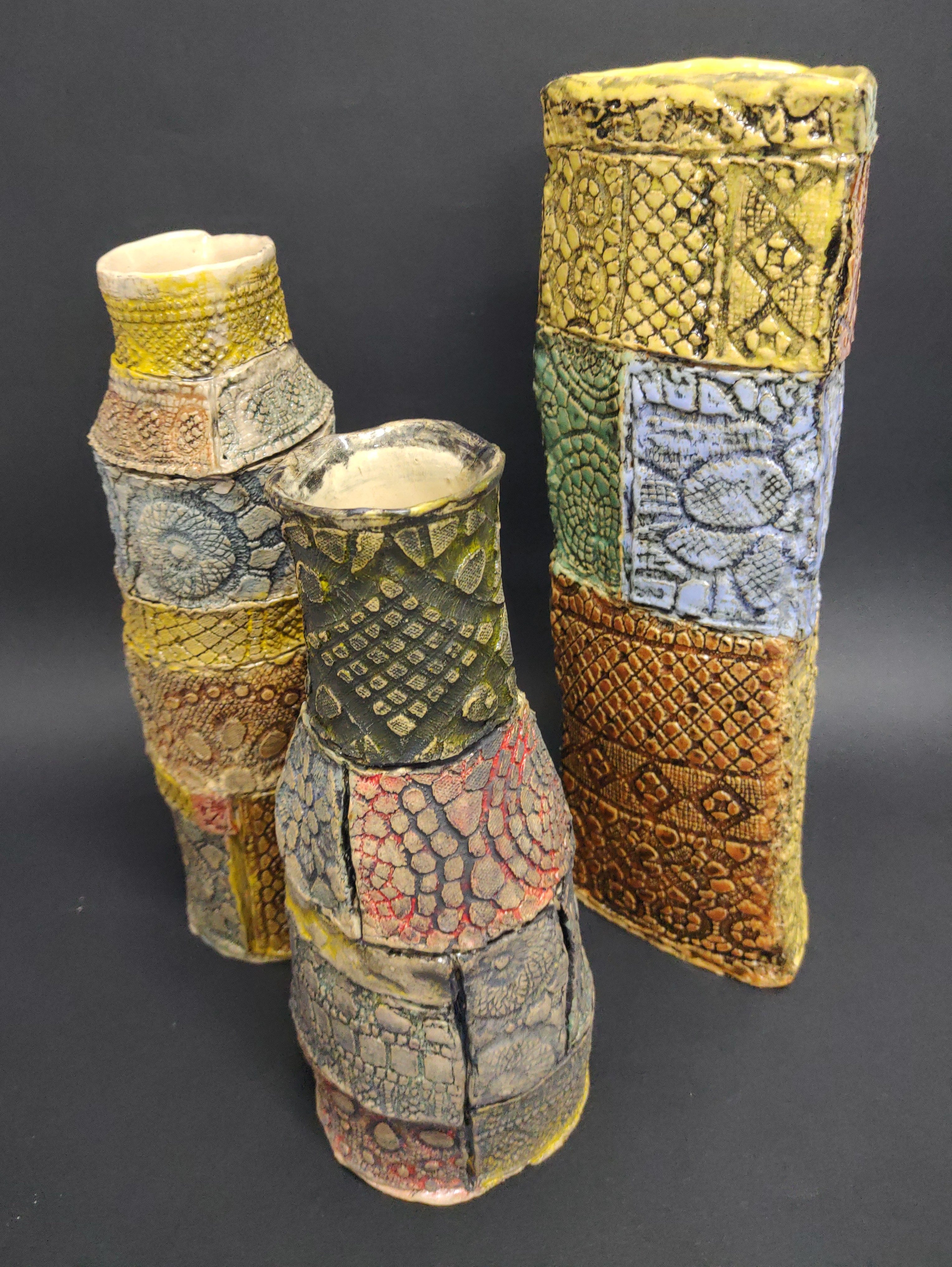
Two views of three of the quilt vases.
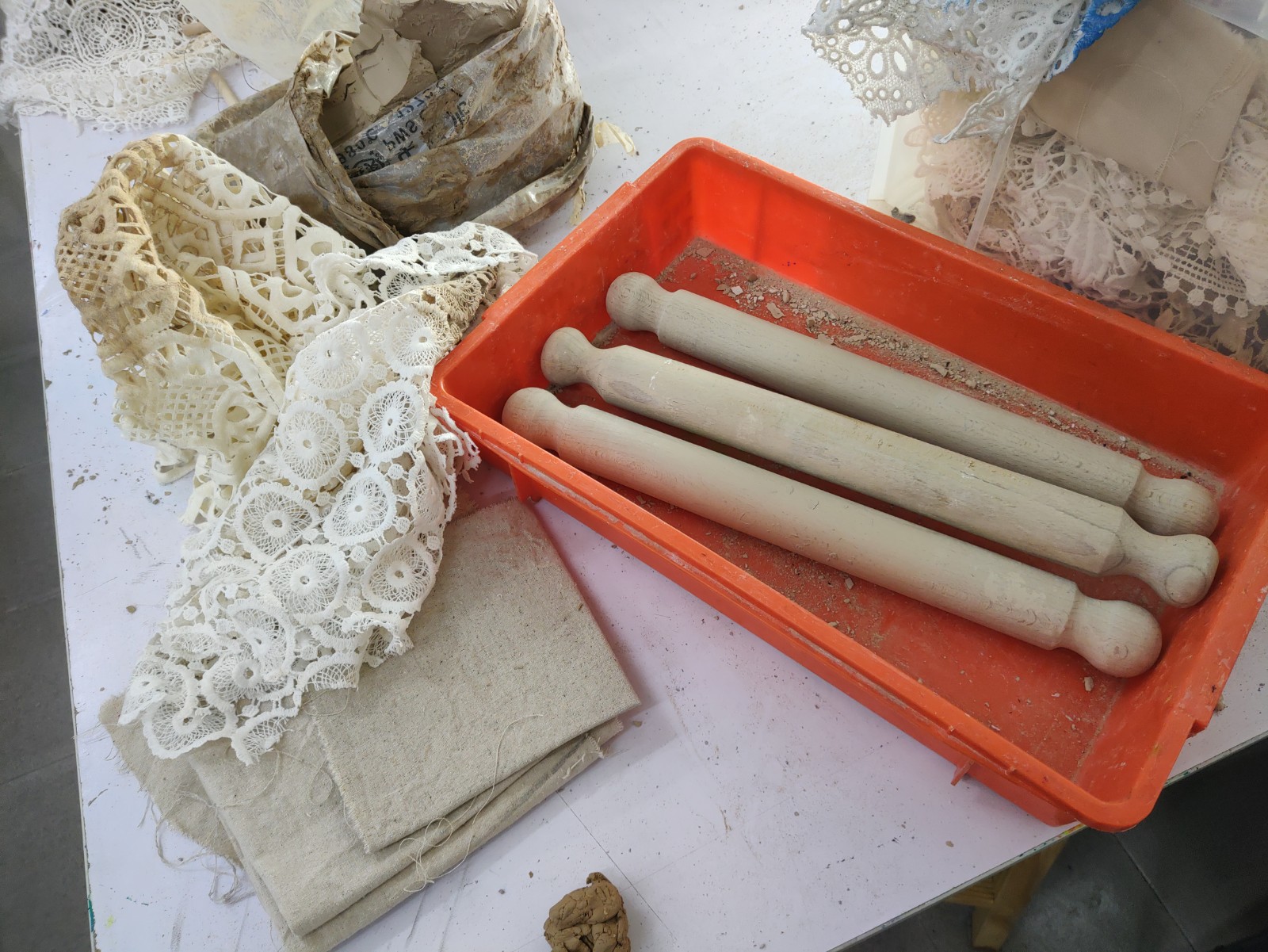
Slab building is an essential component to any ceramics program. If you’re not familiar with ceramics, slabs are sheets of rolled out clay that are used for sculpting functional and non-functional objects. Many facilities have a slab roller, which is just a large table that rolls out the clay for you…but you can also use rolling pins if you don’t have one.
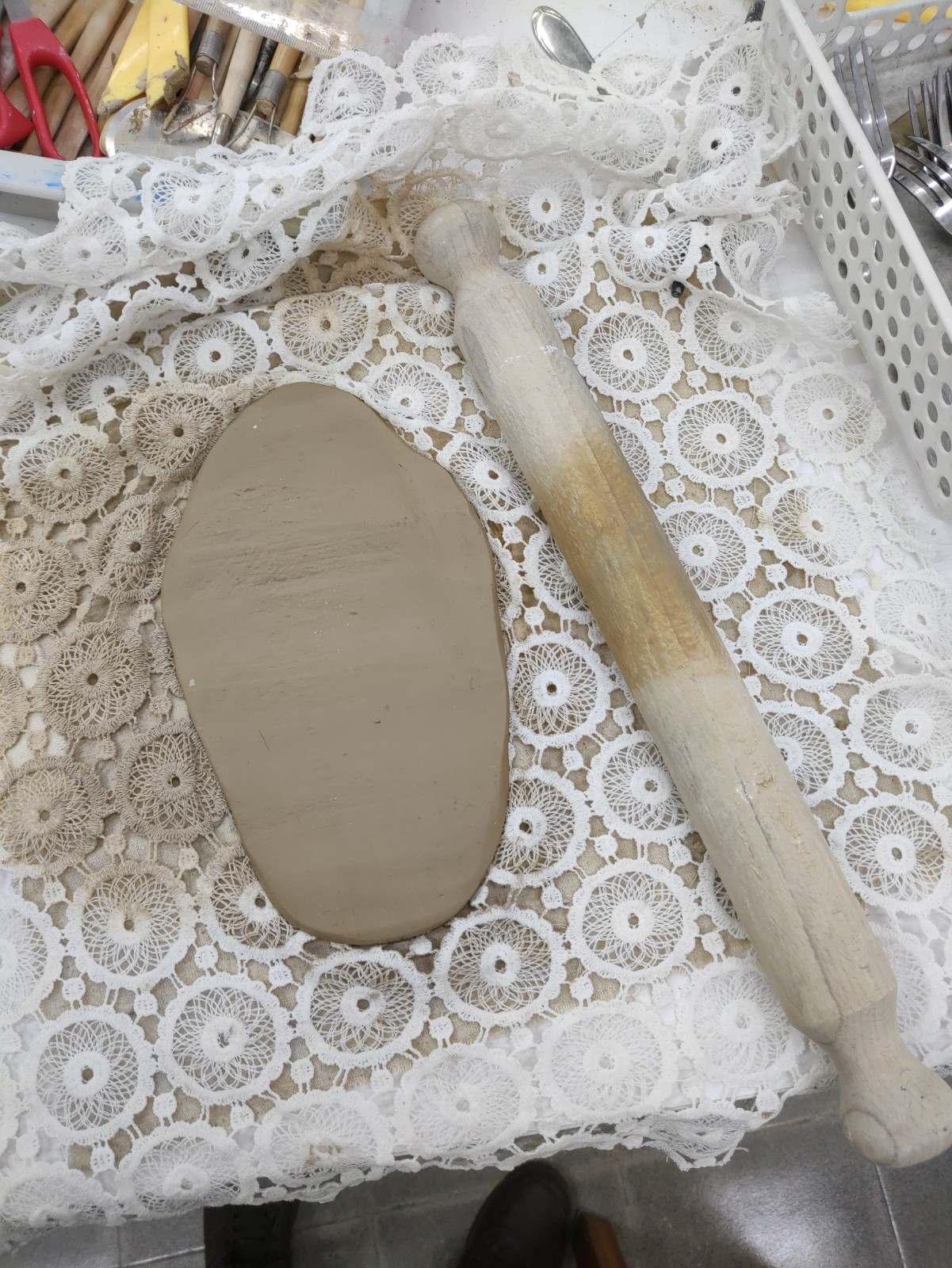
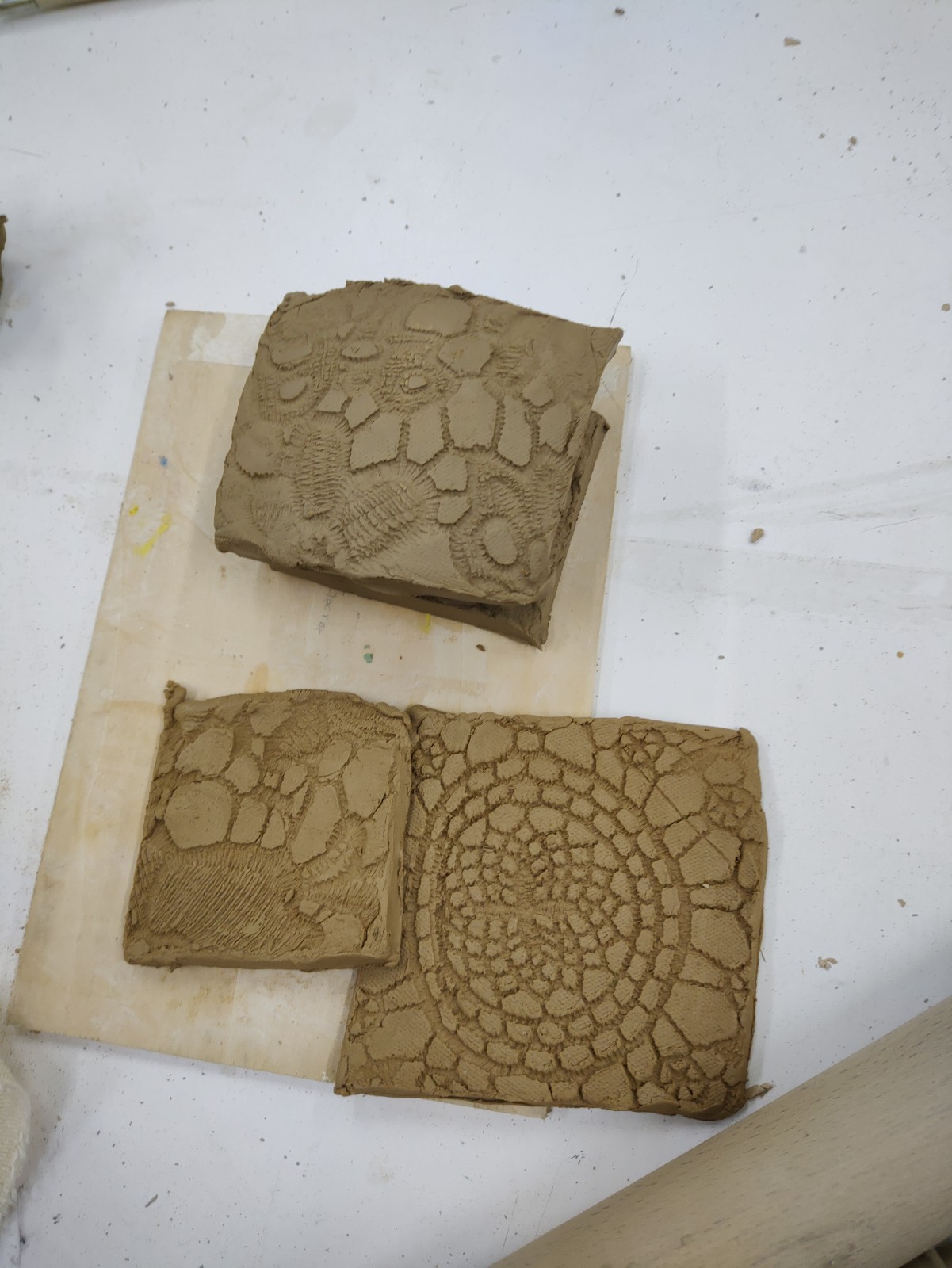
To spice-up a slab building project, I had students roll their clay onto pieces of lace to print/press the texture onto the clay. The results are shockingly detailed! Every little thread seemed to reveal itself in the networks of intricate patterns. I used the example of quilts to add a cultural/historical component to the project. Most of students had not seen a quilt before and didn’t really know what one was, so that was a great learning opportunity in itself…and that’s how my quilt vases assignment came to be.
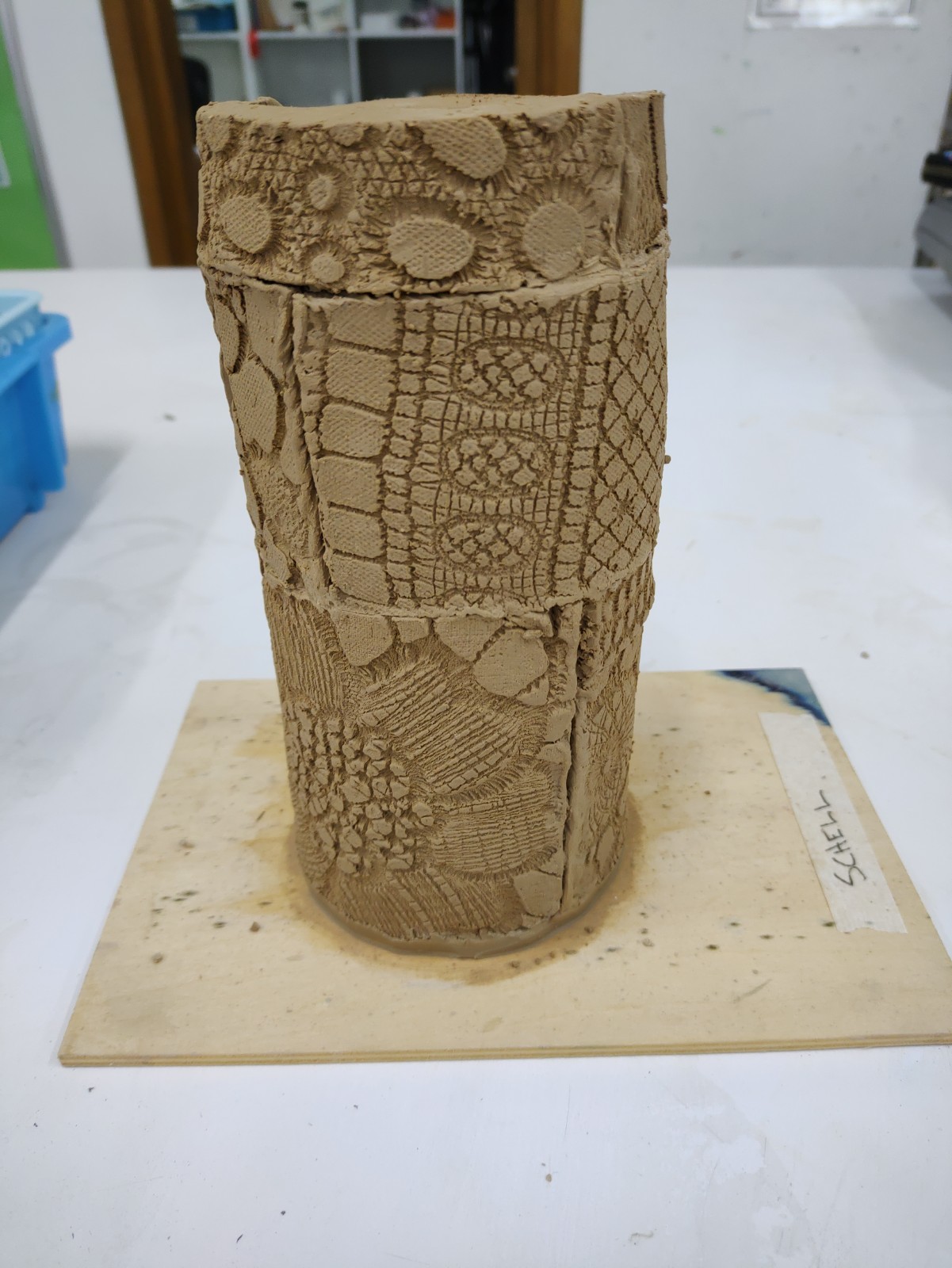
The process is pretty simple but requires a basic knowledge of using class, like how to score and slip, dry clay to the leather hard state, and how to stain the textures. I instructed my students to make a vase with at least 10 quilt pieces, most used closer to 15. Cylinders were the easiest, but many chose to make shapes like pentagons, triangles, hearts, or even irregular bottle-type shapes. After their work was fired, we glazed each slab piece with a different color, fired it again, then stained the textures with black and fired then one more time. The staining process was also straight forward. You just brush black glaze onto the surface and then wipe it off the top with a sponge, so the remaining glaze fills the cracks and textures. The pictures above and below show the steps and results.
This was a great art unit to do after printing on linoleum blocks, since pressing the clay onto the fabric was essentially another form of print making.
 Draw, Paint, Think