
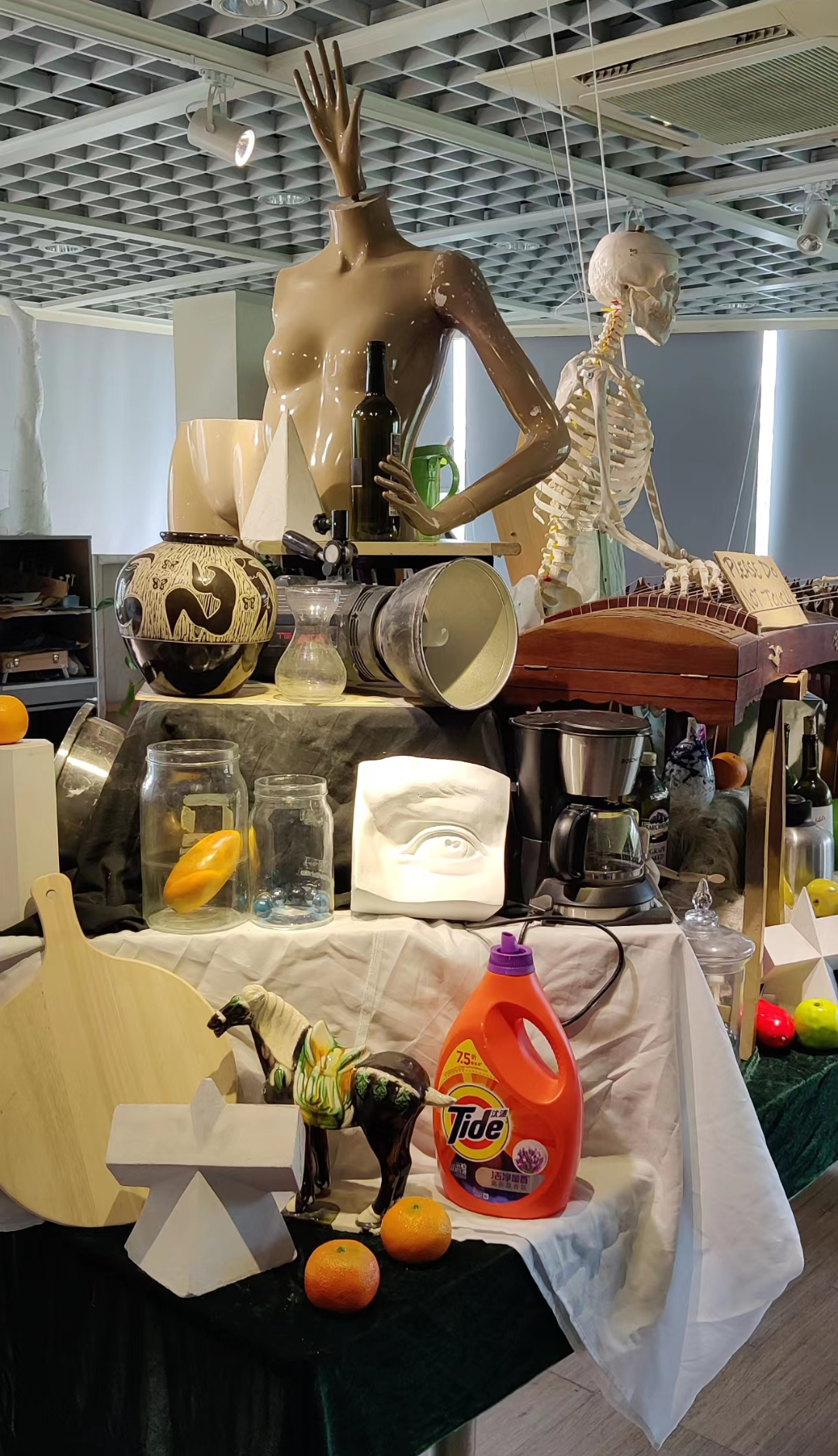
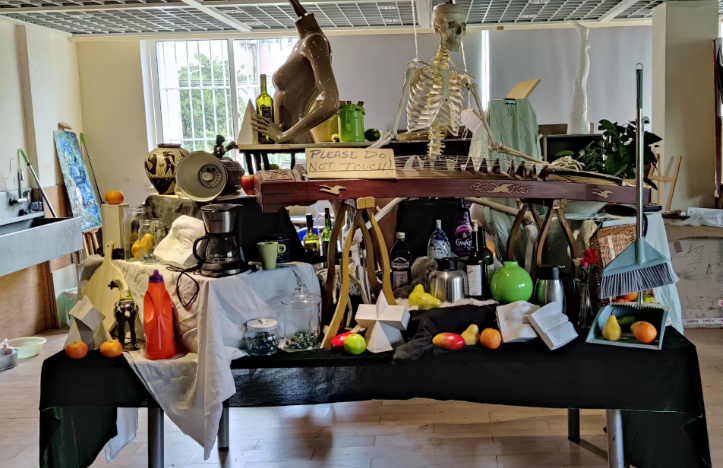
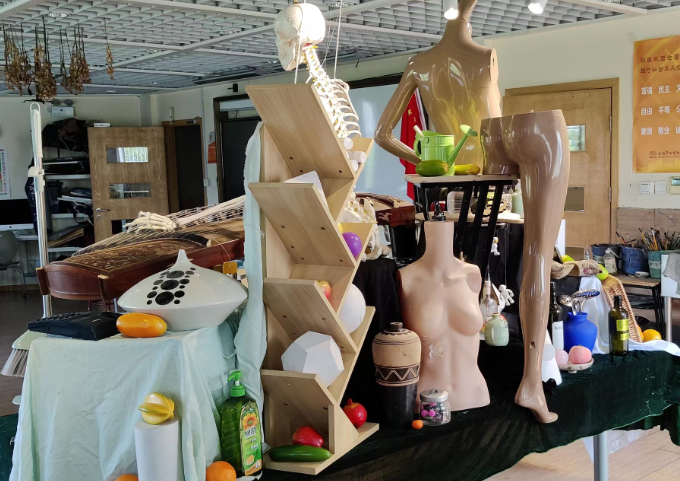
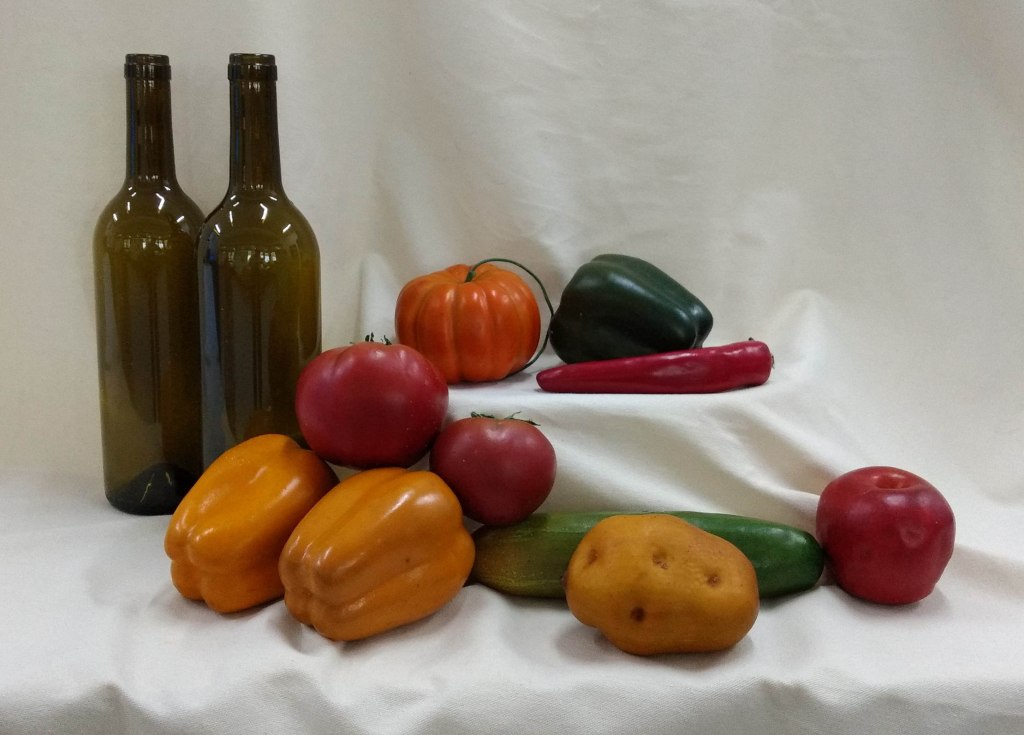
Photos of a crazy still life my art teacher friend tortures his students with.
Drawing or painting a still life spans the history of art itself (as far back as the Roman, perhaps further still)…and I think it was best summarized by Van Gogh painting his boots. When you’ve literally got nothing left to paint, just grab the stuff around you, organize it, and get to work on an art piece of it. Admittedly, still life art is uninspiring to me, but students really resonated with it around middle school when they start wanting to see how well they can make artwork that looks like reality. So even though they aren’t my favorite assignments, I get it and understand their importance both developmentally and historically. Doing one still life each year until my students are in IB or AP art makes sense to me.
I have an art teacher friend who sets up maddeningly complicated still lifes for his students (pictured above). They look more like Rube Goldberg machines. And what’s up with the hand on the mannequin’s head?! I keep mine simple relying more on what the individual objects convey and can teach us. Call it a “you could do this at home” approach to still life. I also think it’s a great activity for online learning and am not opposed to students drawing a photo of a still life on a screen. Most artists from the renaissance onward were using projectors anyway.
Here are some examples organized by year level and difficulty with brief explanations. I’ve attached my photos below that you’re welcome to nab for a still life.
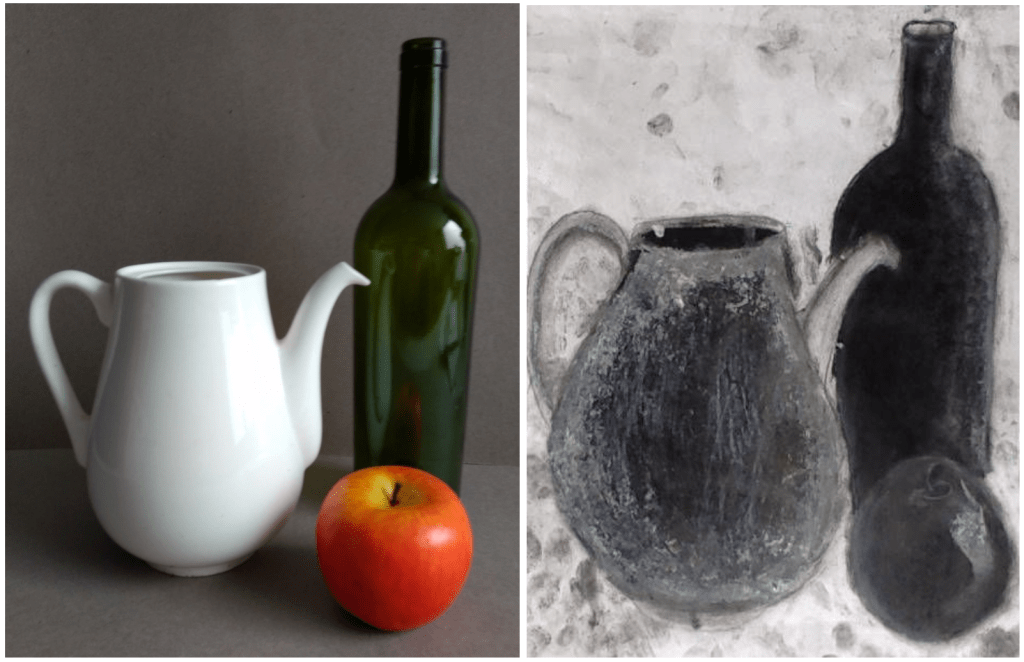
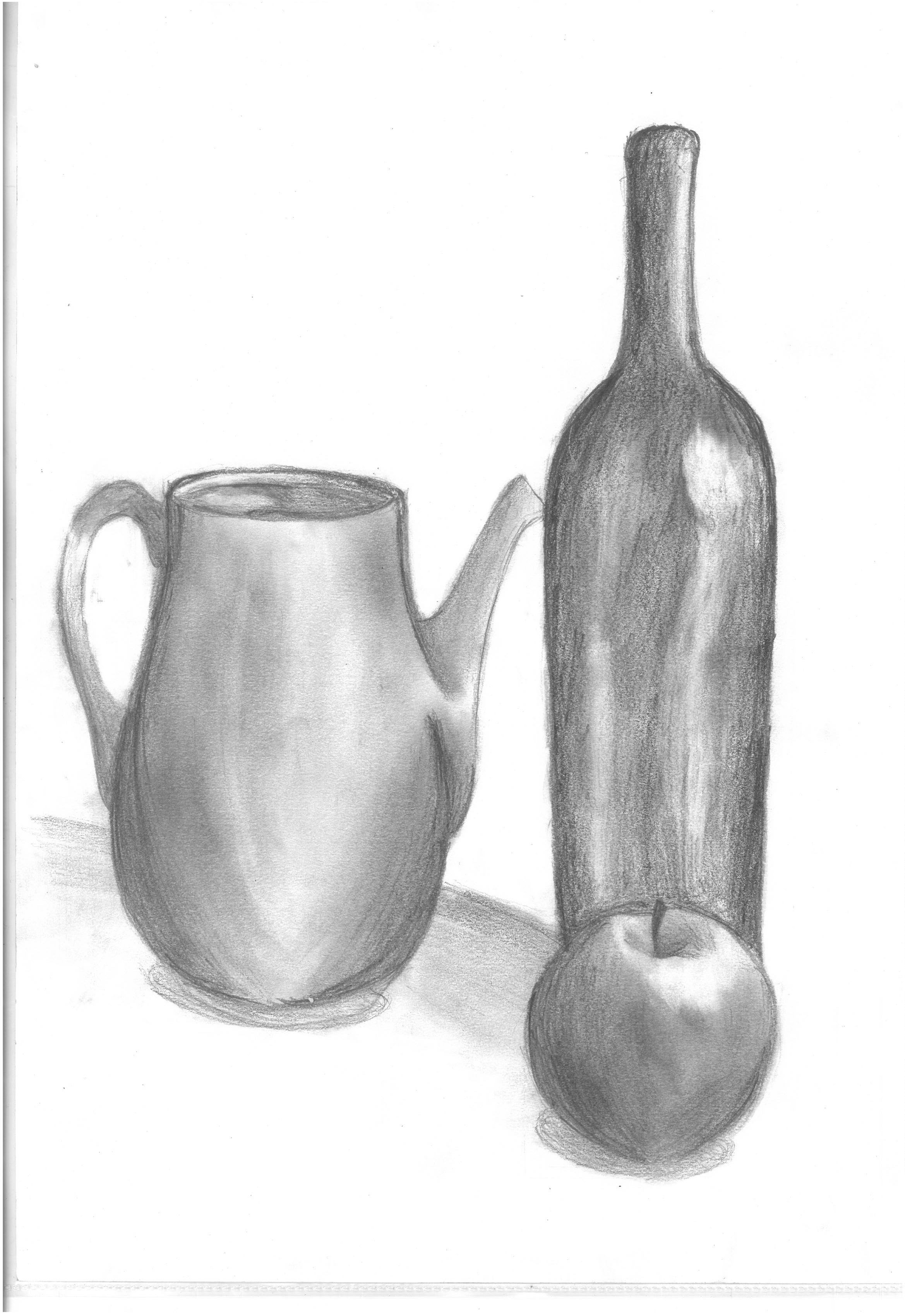


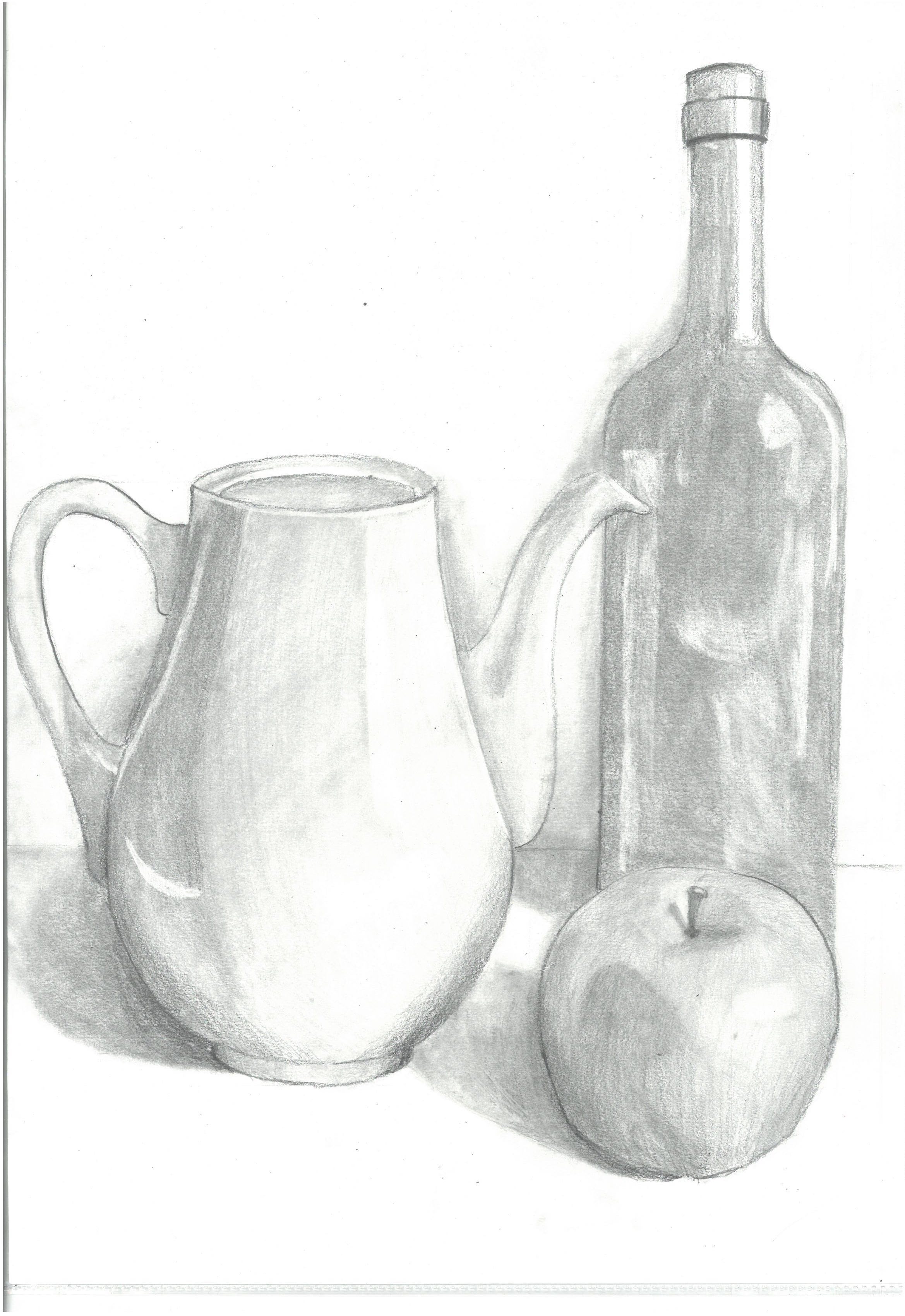
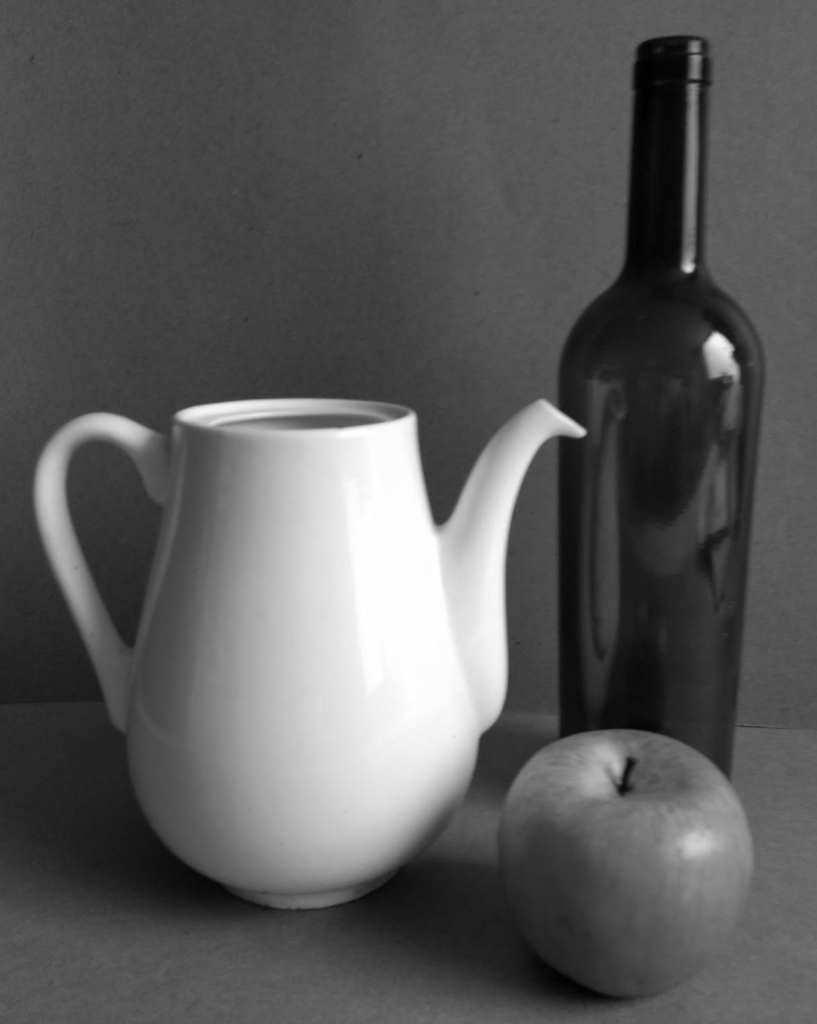
6th Grade Still Life. Very simple with an emphasis on the different tones of a white object (the teapot) and dark object (the bottle). I love the first student example for its expressive mark-making in charcoal. The four pencil drawings below are A3/tabloid size.
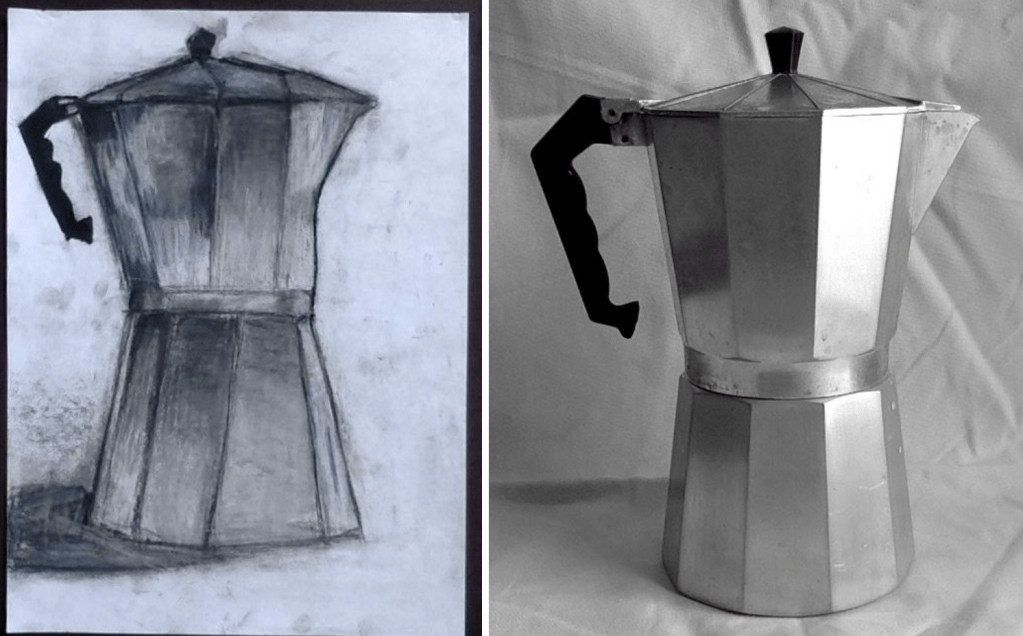
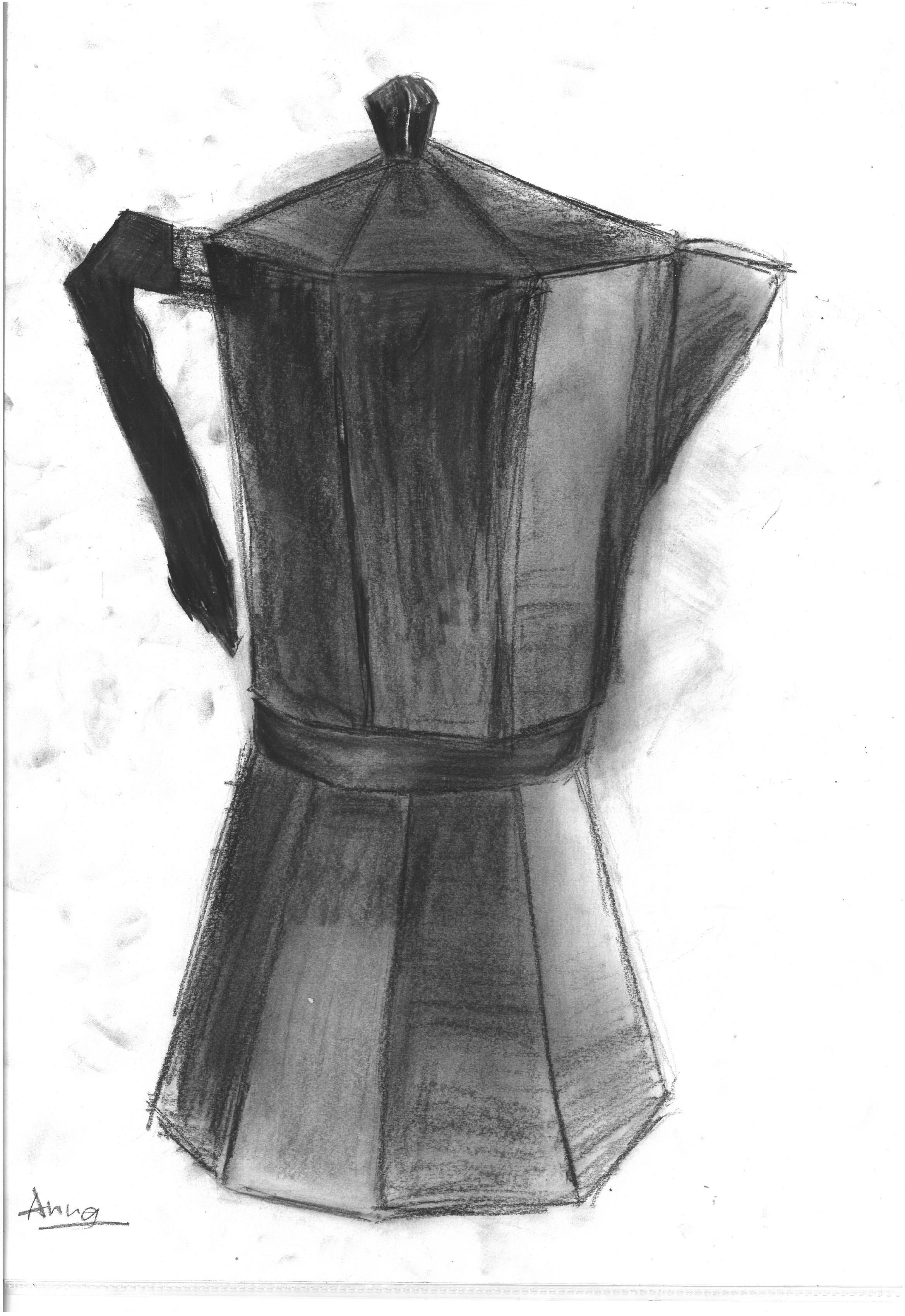
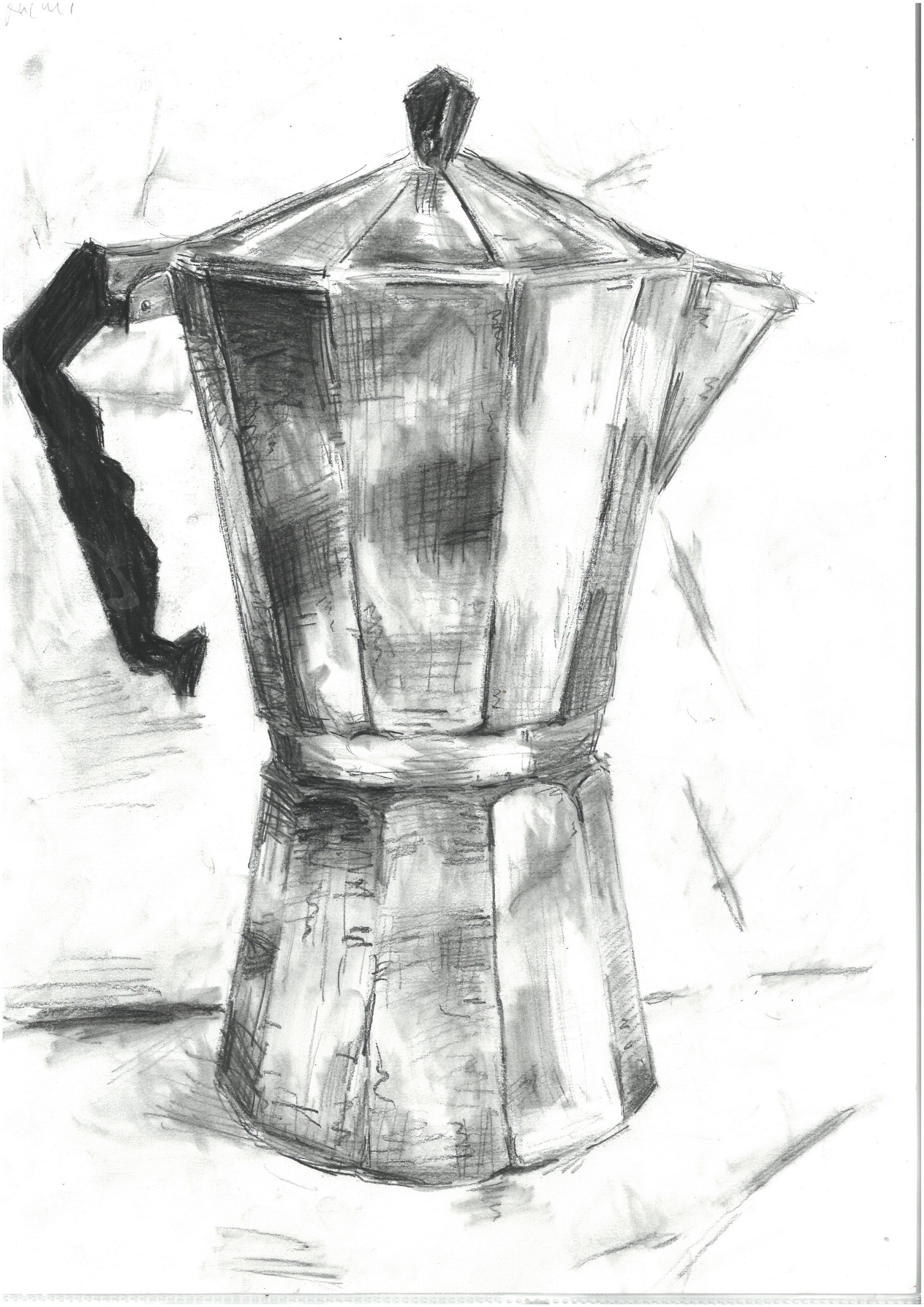
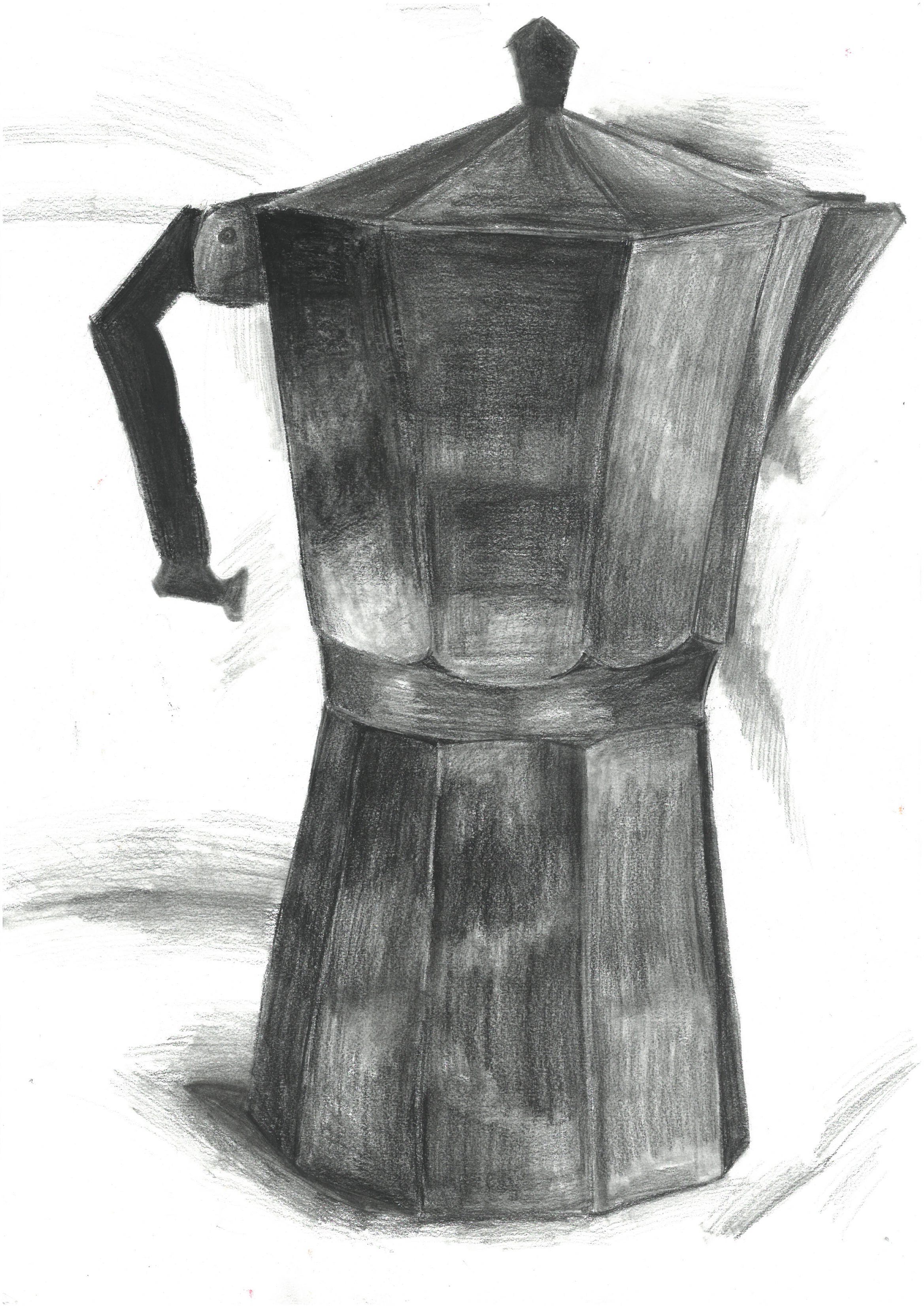
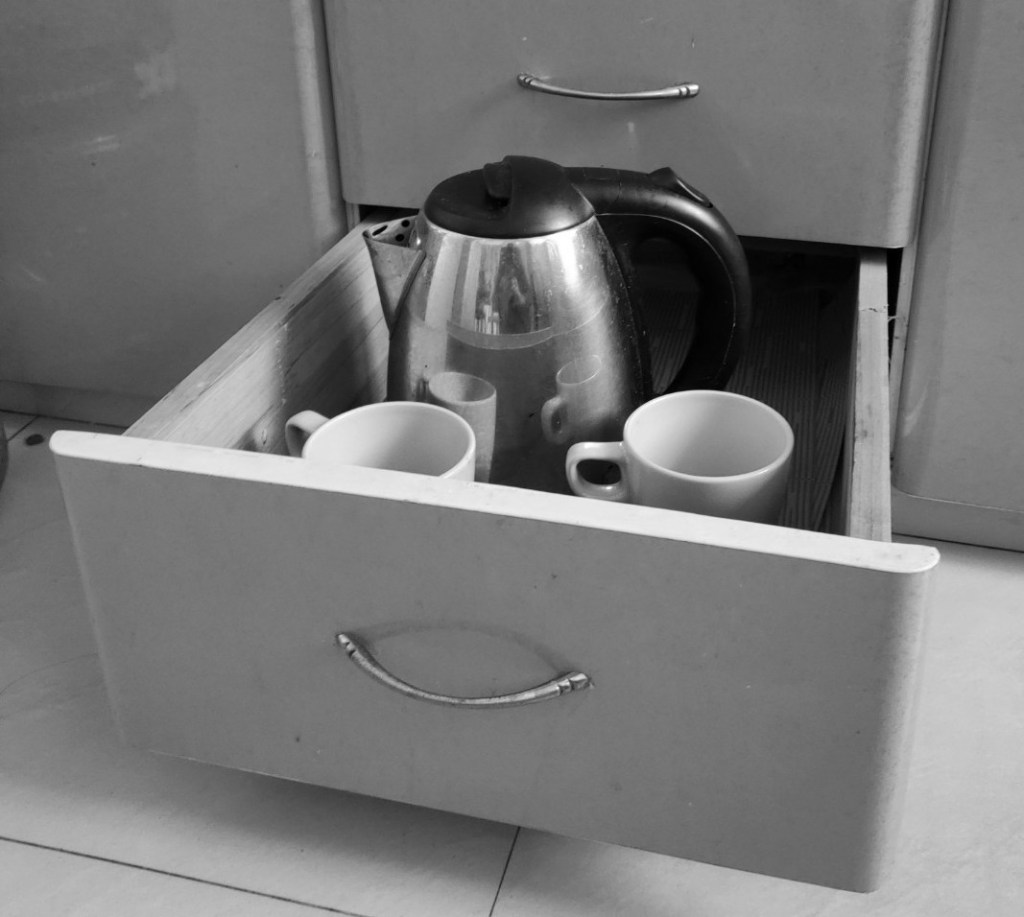
7th Grade Still Life (Coffee Maker). This object allows students to study a range of tones as each panel of the coffee maker reflects the light a little differently. I like doing this one in charcoal. The drawings are A3/tabloid size.
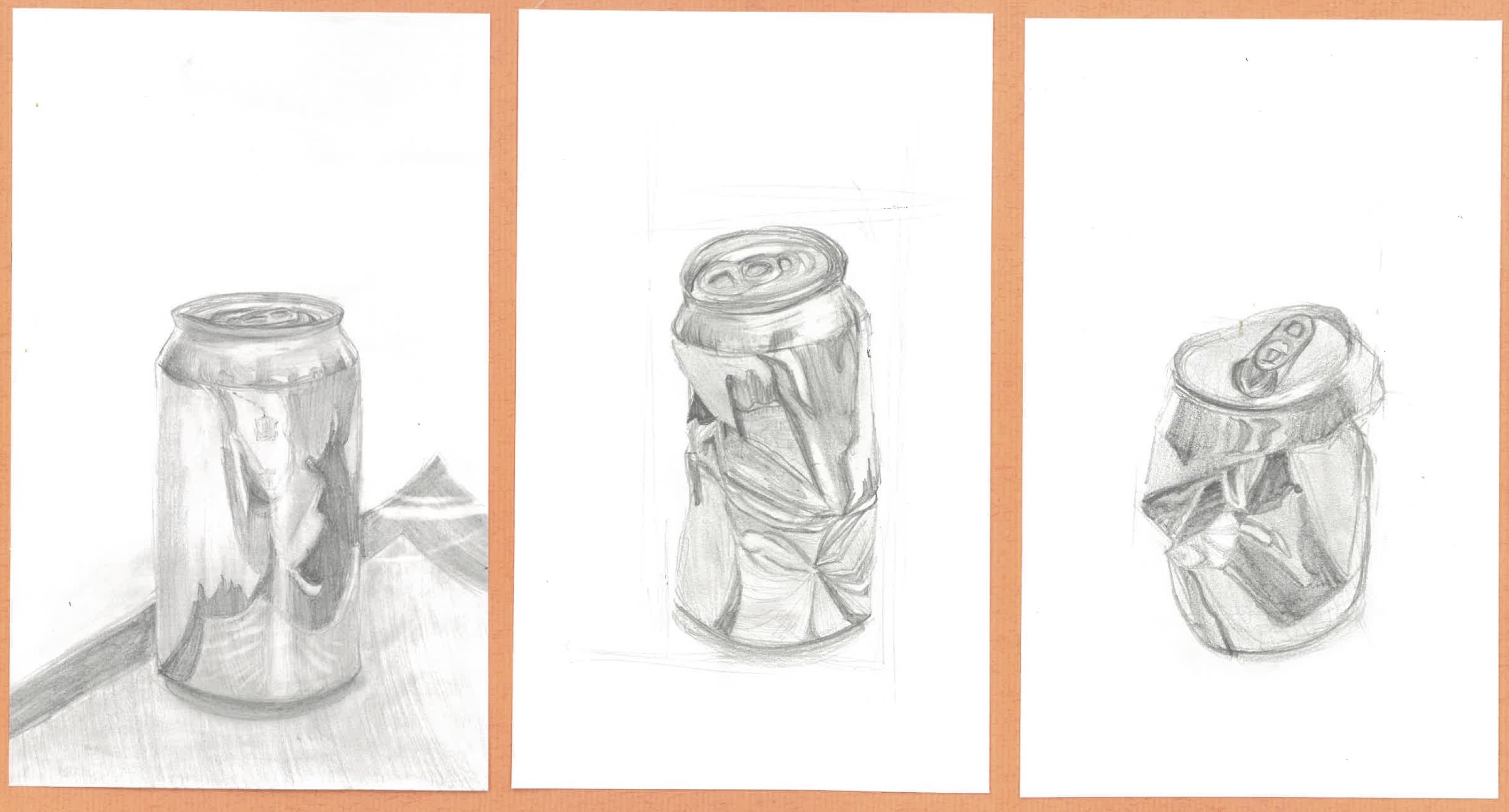

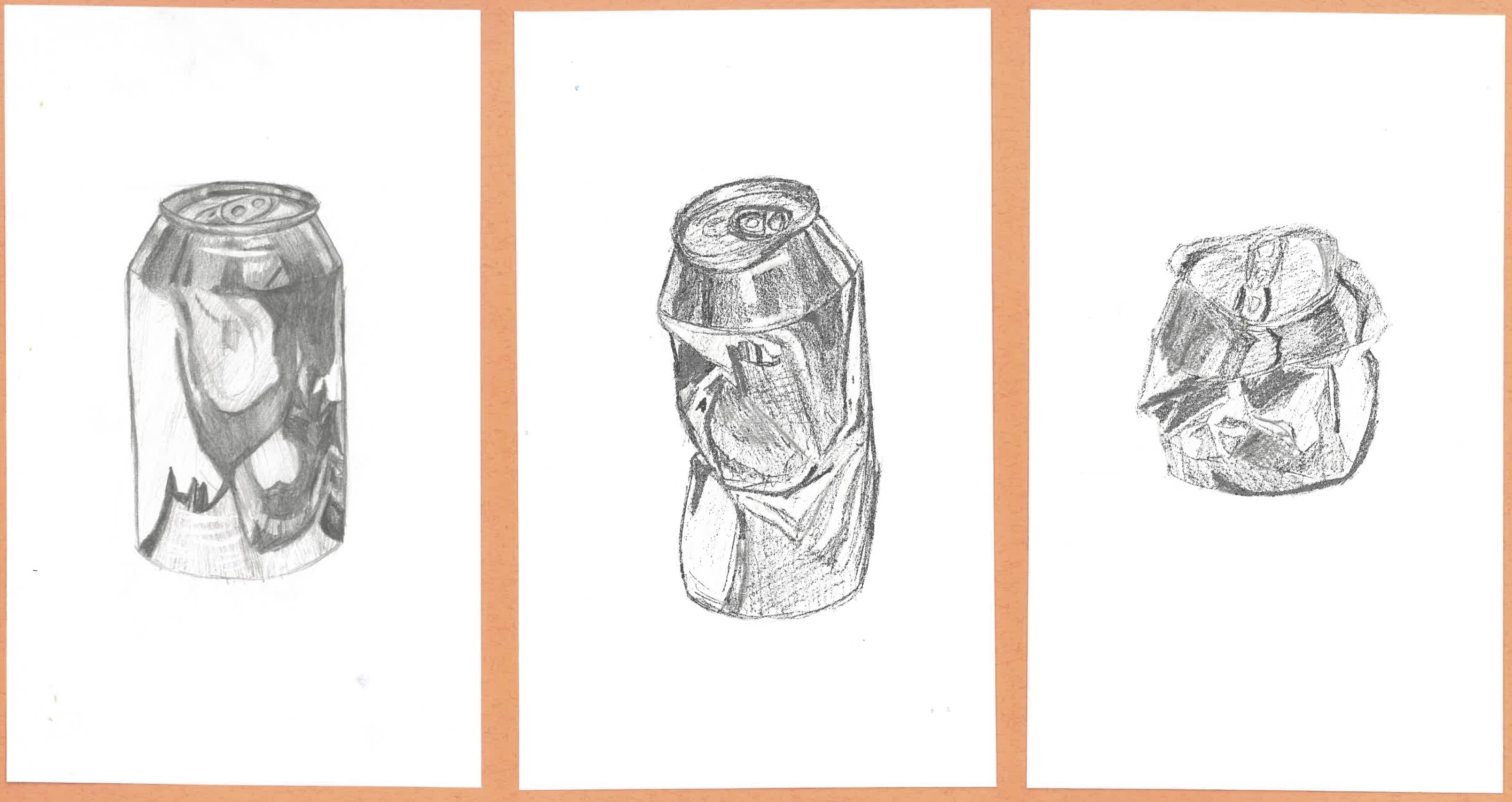
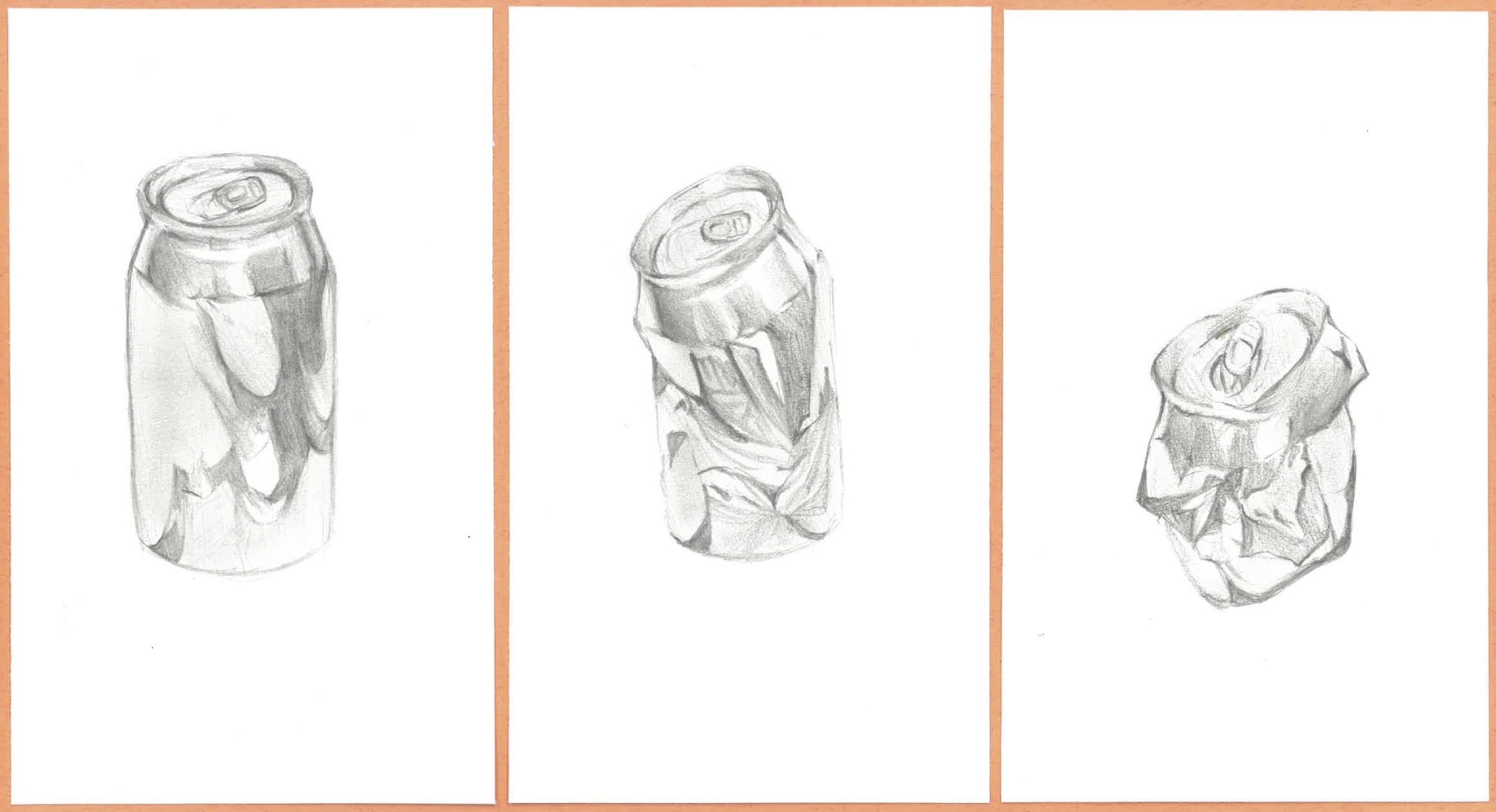
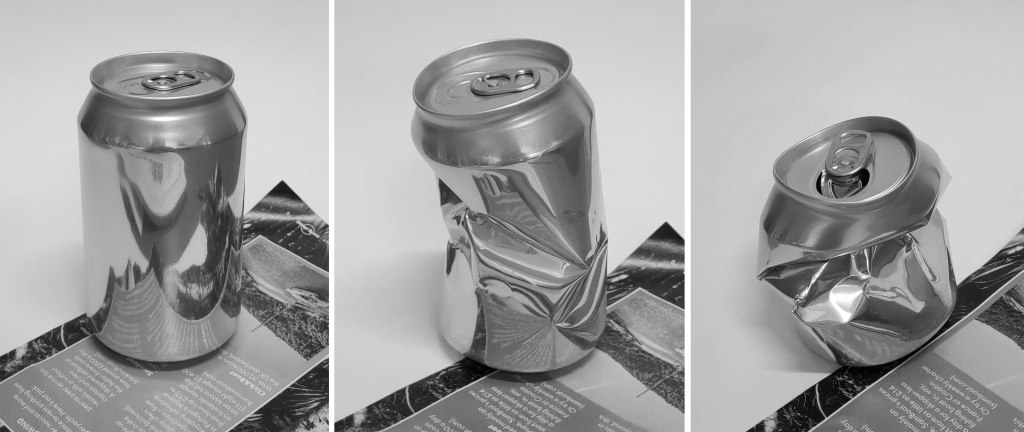
8th Grade Still Life (Metal Can Triptych). This one is starting to get difficult and when the can is getting crushed and the light starts reflecting in very random ways it becomes a right brain activity because you literally have to draw what you see not what you think a can should look like. I’ve always thought the middle can was the most difficult but the students in this example really struggled with the last one.
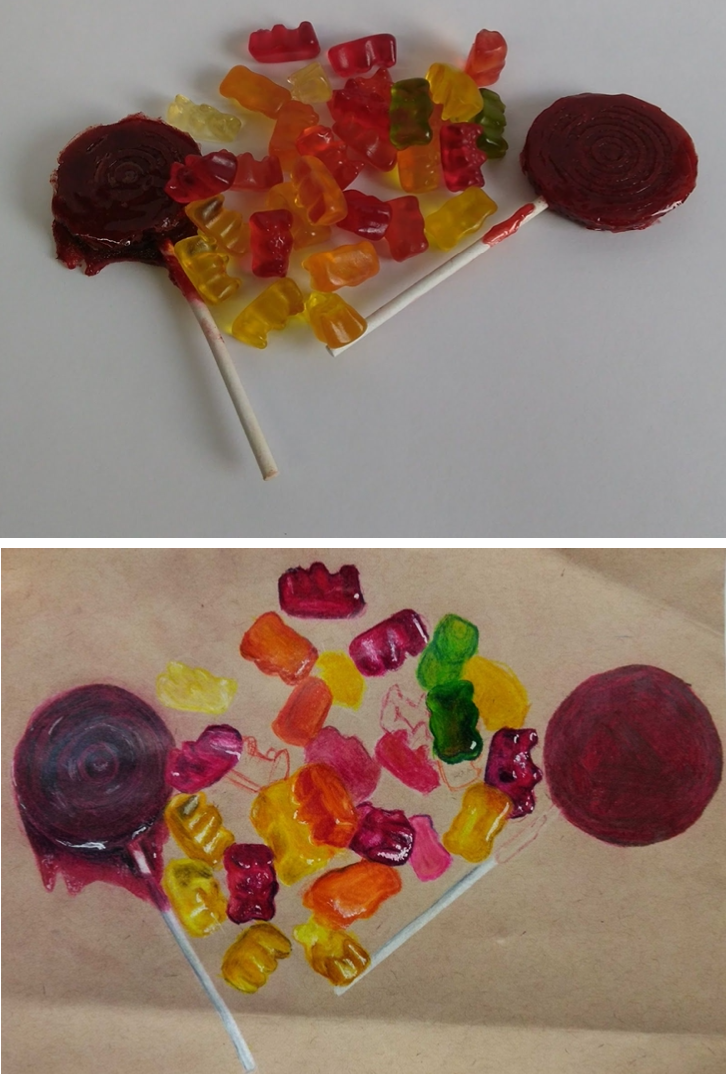
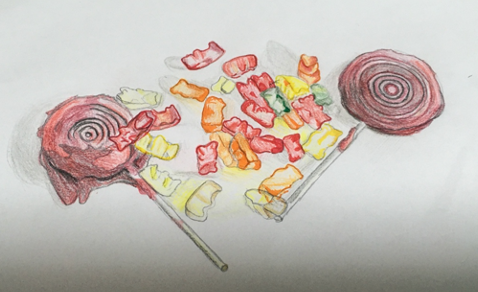
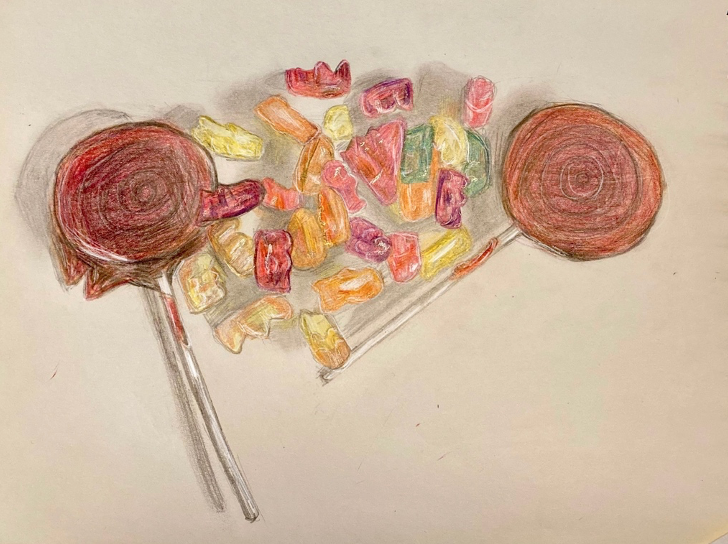
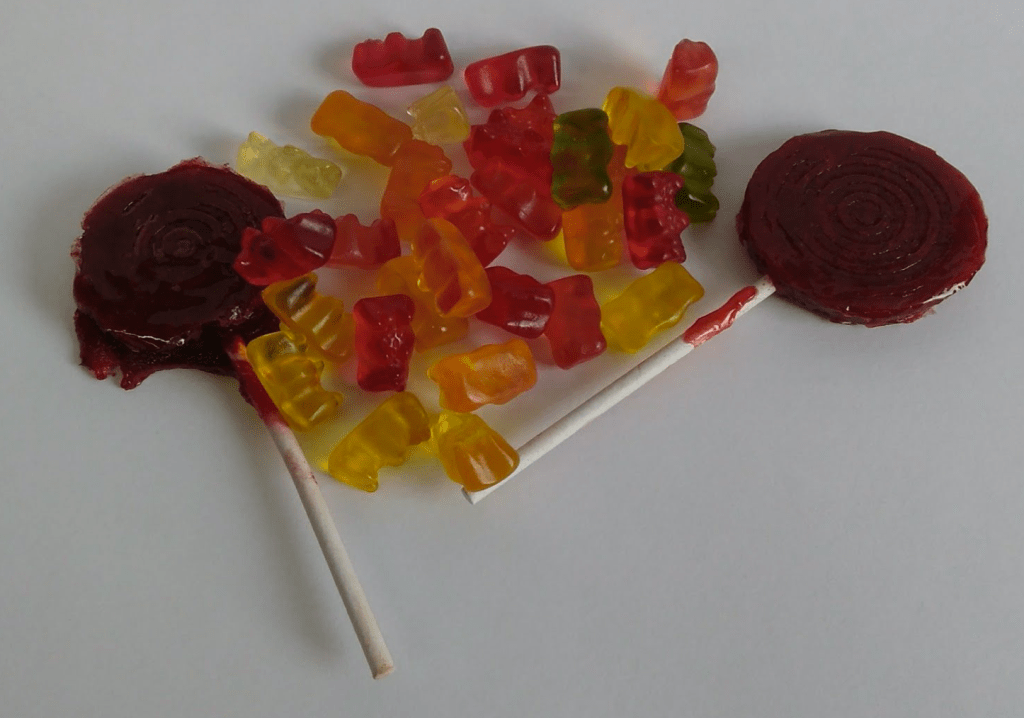
9th Grade Still Life (Shiny Candy). Though simple looking, this one is really hard! If my students can draw shiny candy well, they can draw almost anything (water, glossy makeup, car paint, etc.). And when the gummy bears get mixed into a pile it becomes a right brain activity again. You have to draw what you see (little undulations of reflective color), not what you think a gummy bear looks like.
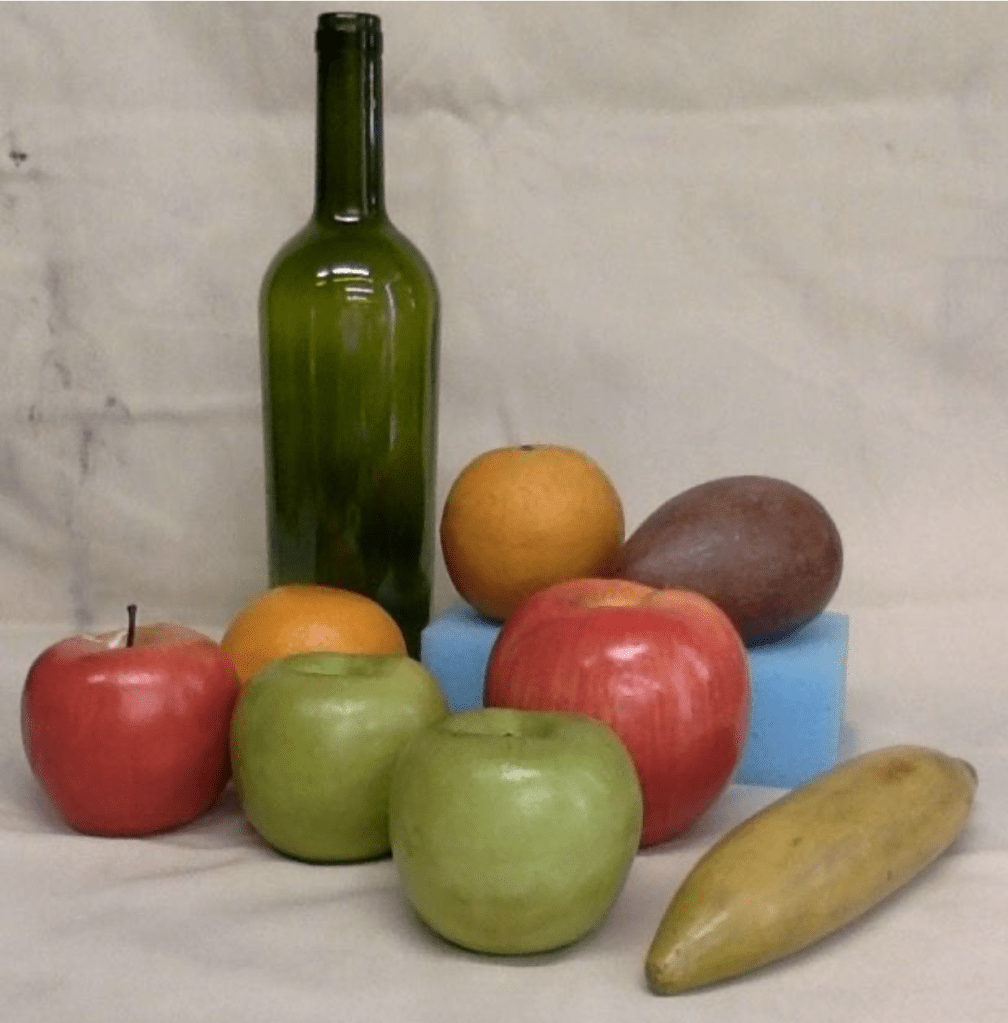
Here are some if my still life photos. Feel free to use them in your lessons.



 Draw, Paint, Think