
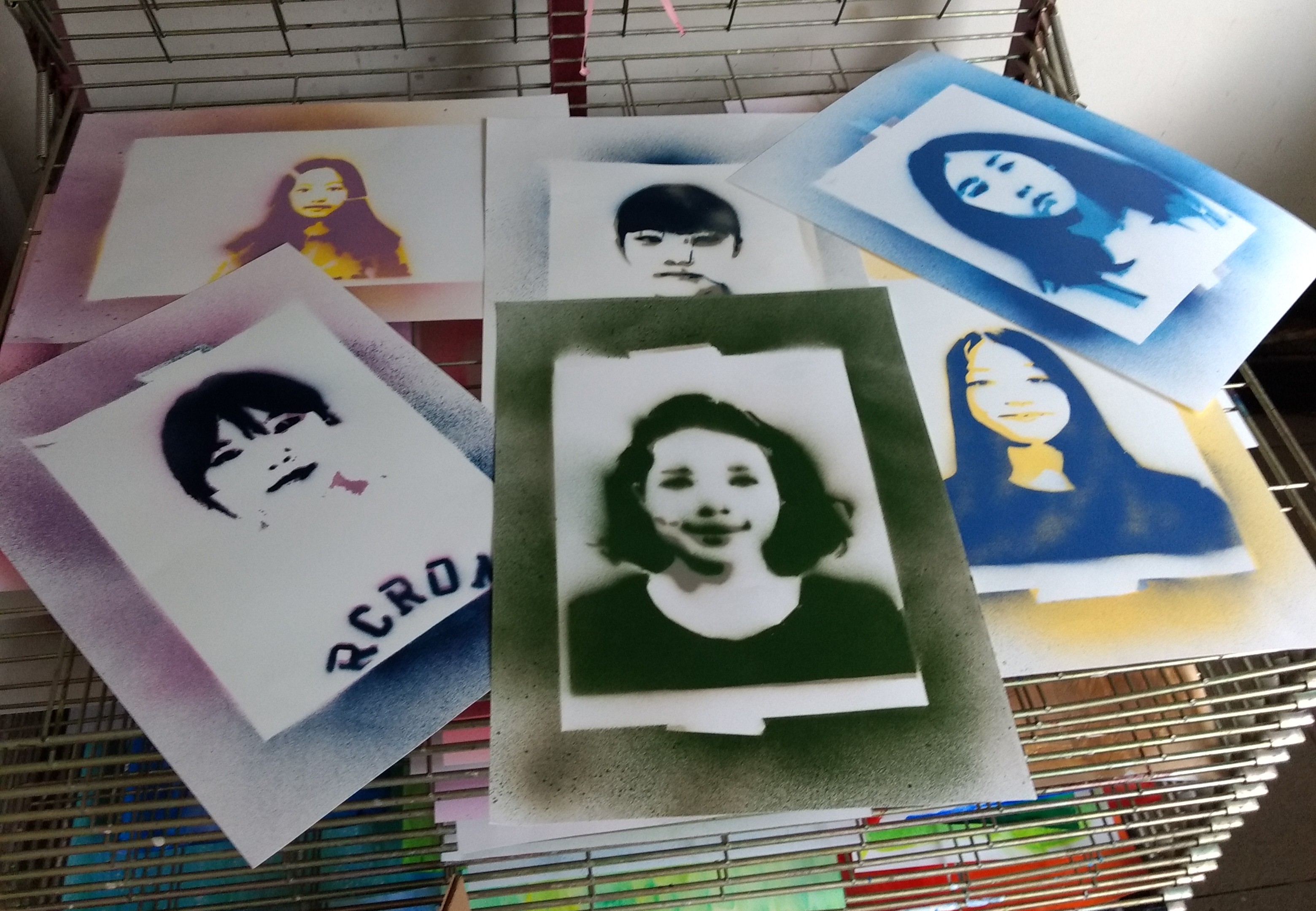
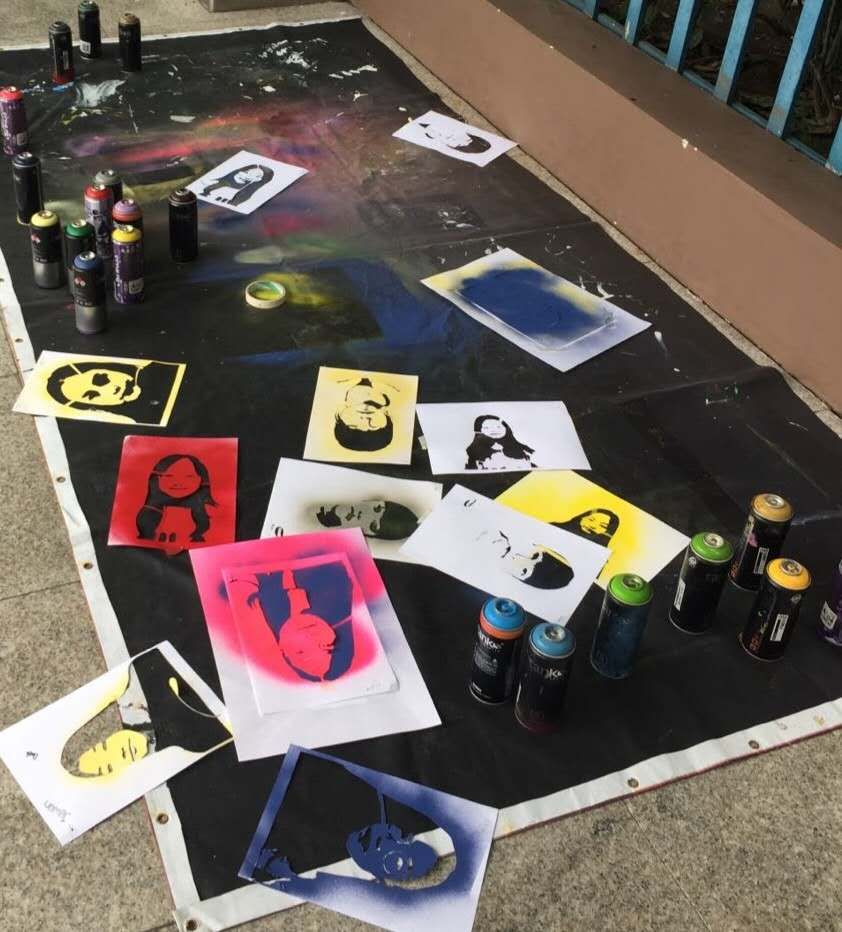
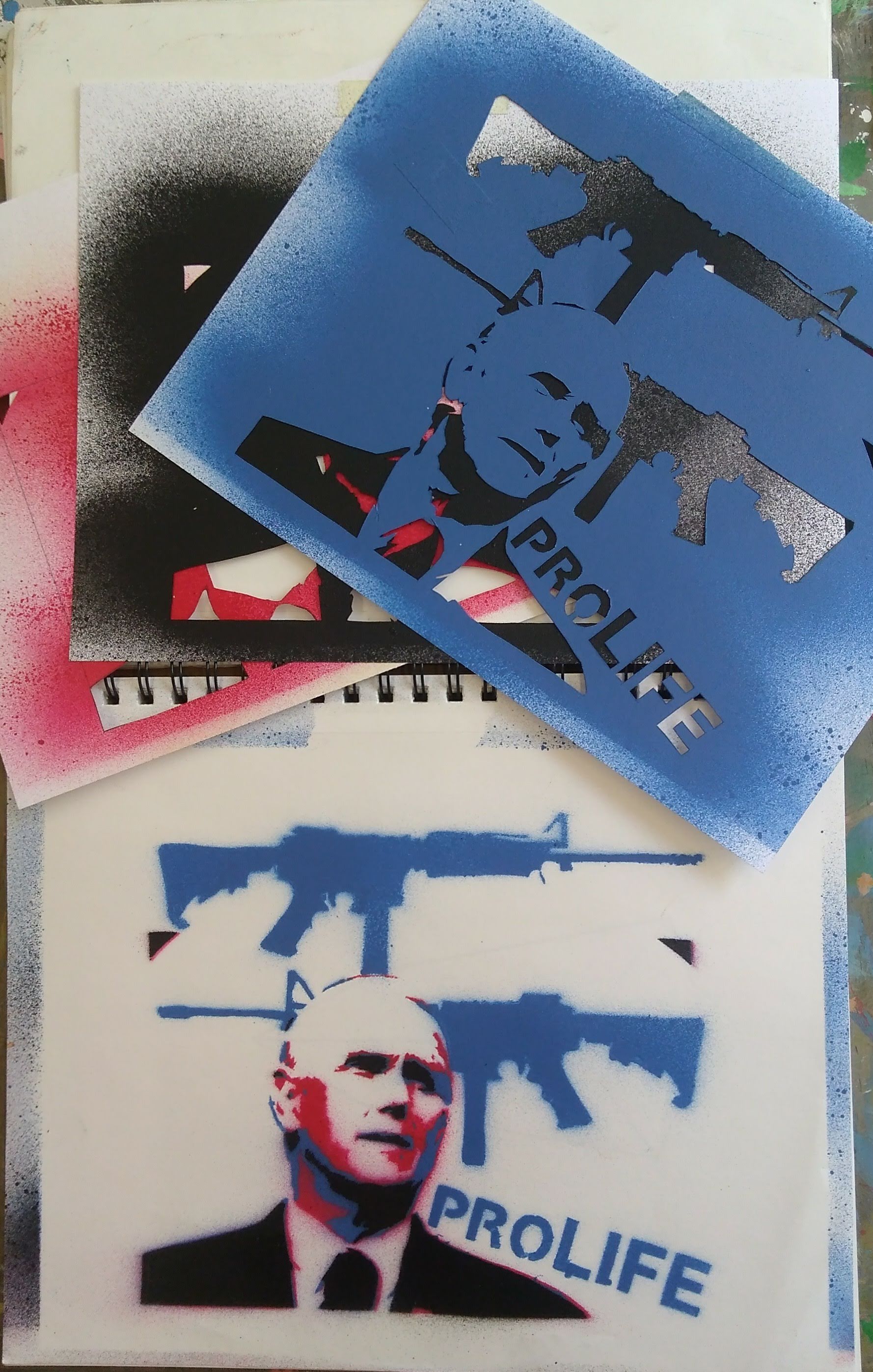
This is another art unit that uses Photoshop to create some powerful images. In Photoshop, the function to make a stencil is called “threshold” and can be used to make various layers. I like 3-4 layer stencils personally. Any more than that and I get some major burnout from my students getting tired of cutting shapes with exacto knives. There are also numerous websites that will make stencils for free, but learning how to do it with Photoshop will ultimately give you more control. The main thing to know when stencilling are “bridges and islands”. The stencil has to be connected somehow, so no “islands” or little pieces that aren’t connected to the outer stencil. If you do have an island, you must connect it with a bridge. We print our stencils on 60-90lb paper (card stock). You also need to punch a hole in the the corners of all the stencil layers together so they line up after you cut them out and spray them later. Protip: Montana Spray Paint sells a water-based spray paint that is practically odorless and much less harmful (though still wear a mask when spraying!).

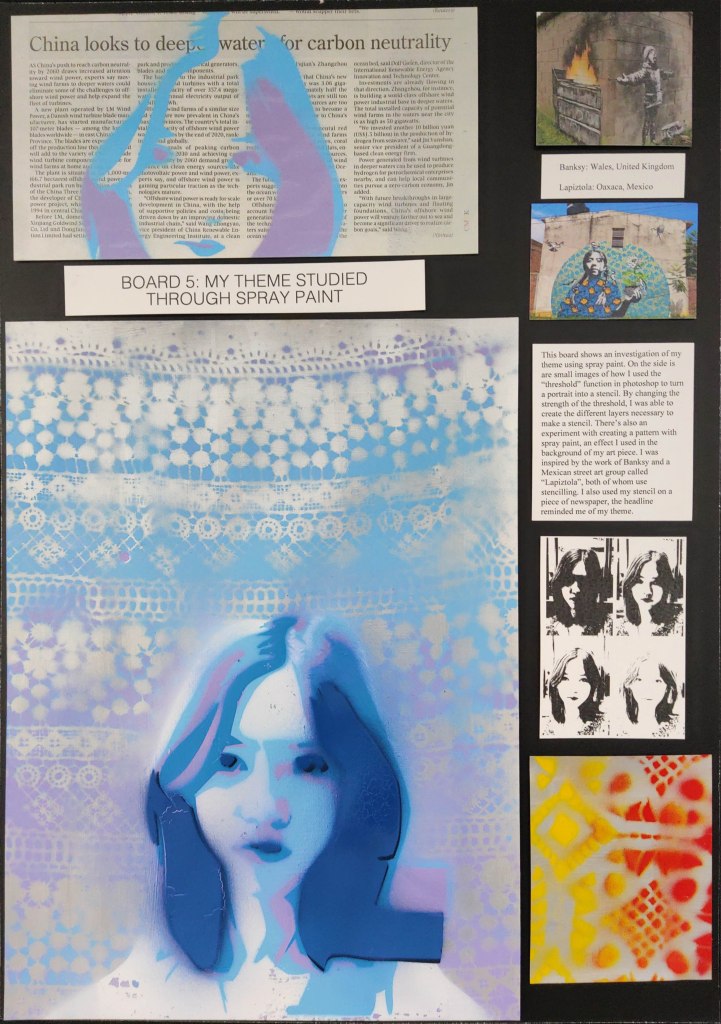
If you do this in an IB or IGCSE class a great artist investigation could include one Banksy, who’s work is just fantastic for a study of conflict, peace, and capitalism. But I also like to show a stencilling group from Oaxaca, Mexico called Lapiztola who are great for a study of themes like human migration and indigenous-peoples’ rights ( http://www.instagram.com/lapiztola/ ). I’m a big fan of their work and proudly own one of their pieces.
In the best results I’ve had from this project students paint a base layer of metallic-colored paint (like silver) on a surface, then I have them spray paint through a lace patterned piece of cloth. Afterwards, they spray their stencil on the surface. Once the stencils are made, the best thing is that they can be used over and over again. Spraying them onto a newspaper with an interesting headline is another good option.
 Draw, Paint, Think